
Guided visit to the memorial of the women’s prison of las Corts
On 24 October, coinciding with the REMEMCHILD congress held on 23 and 24 October, a guided visit was made to the memorial of the former women’s prison of Las Corts.




AMERICAN AID TO BRITAIN: LIFE AT SYSTON COURT NURSERY, THE SARA DELANO ROOSEVELT HOME, GLOUCESTERSHIRE, ENGLAND, 1942 © IWM (D 8876)
The REMEMCHILD project is a commitment to the continuity of the MIGRAID- Migrations and Humanitarian Aid in Europe (1914-1949)- project, approved in the Europe For Citizens 2019 call, whose main objective has been to delve into the collective experiences of children and women from 1914 to 1949, a turbulent and crucial period in the history of Europe, marked by two world wars and their multiple consequences on the civilian population.

The REMEMCHILD project (101091194 CERV-2022-CITIZENS-REM) has been funded by the European Commission in the framework of the Citizens, Equality, Rights and Values programme - European Remembrance.
To recover and preserve the memory of European childhood
To highlight the discrimination, persecution and hatred applied by non-democratic regimes and their impact on children and women
To reaffirm and spread the fact that the solidarity between the peoples of Europe was mainly led by women, as the lifeline of European children
To fight from history, knowledge and memory against the misrepresentation and denial of the Holocaust
To reflect on and educate about the consequences of the Second World War and to commemorate its victims
To combat anti-Semitism, racism, discrimination, hatred, xenophobia, etc., in the face of increasing violent discourse and intolerance
Defend and promote the fundamental values of the EU, such as democracy, respect for freedom, equality, human dignity, children’s and women’s rights, etc.
To raise awareness among the younger generation of the dangers of war by educating and conveying the importance and values of peace
Promote mutual understanding, tolerance and support intercultural and intergenerational dialogue

On 24 October, coinciding with the REMEMCHILD congress held on 23 and 24 October, a guided visit was made to the memorial of the former women’s prison of Las Corts.

Between 18 October and 30 November, the exhibition ‘Childhood in a world at war’ was hosted by the University of Barcelona, coinciding with the REMEMCHILD congress held on 23 and 24 October.

The Departmental Council of Haute-Garonne and the Departmental Museum of Resistance and Deportation join forces to mark the 80th anniversary of the Liberation of France.
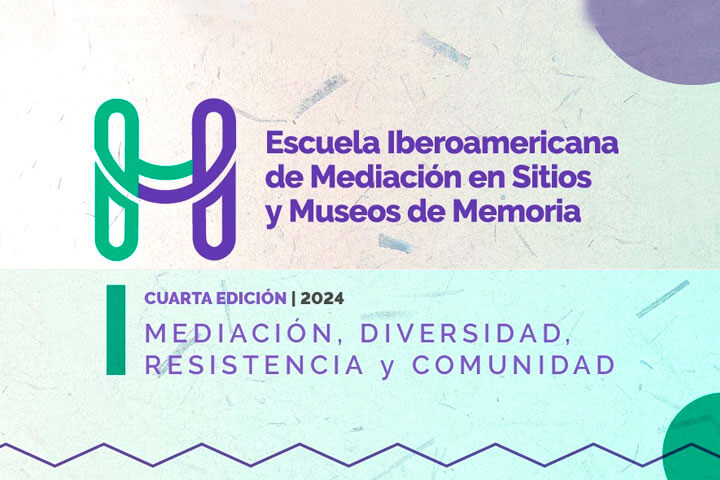
The School of Mediation in Museums and Sites of Memory is proposed as a space that seeks to contribute to the training of mediators, educators and workers with audiences of museums and sites of memory in the theoretical and practical approach to relevant content for work in these places …

Coinciding with the commemorations of Europe Day, the Office of the European Parliament in Paris will host a preview presentation of the book “Ten Elections. A brief history of the European suffrage (1979-2024)”. Published by the Maison Jean Monnet and the EUROM …
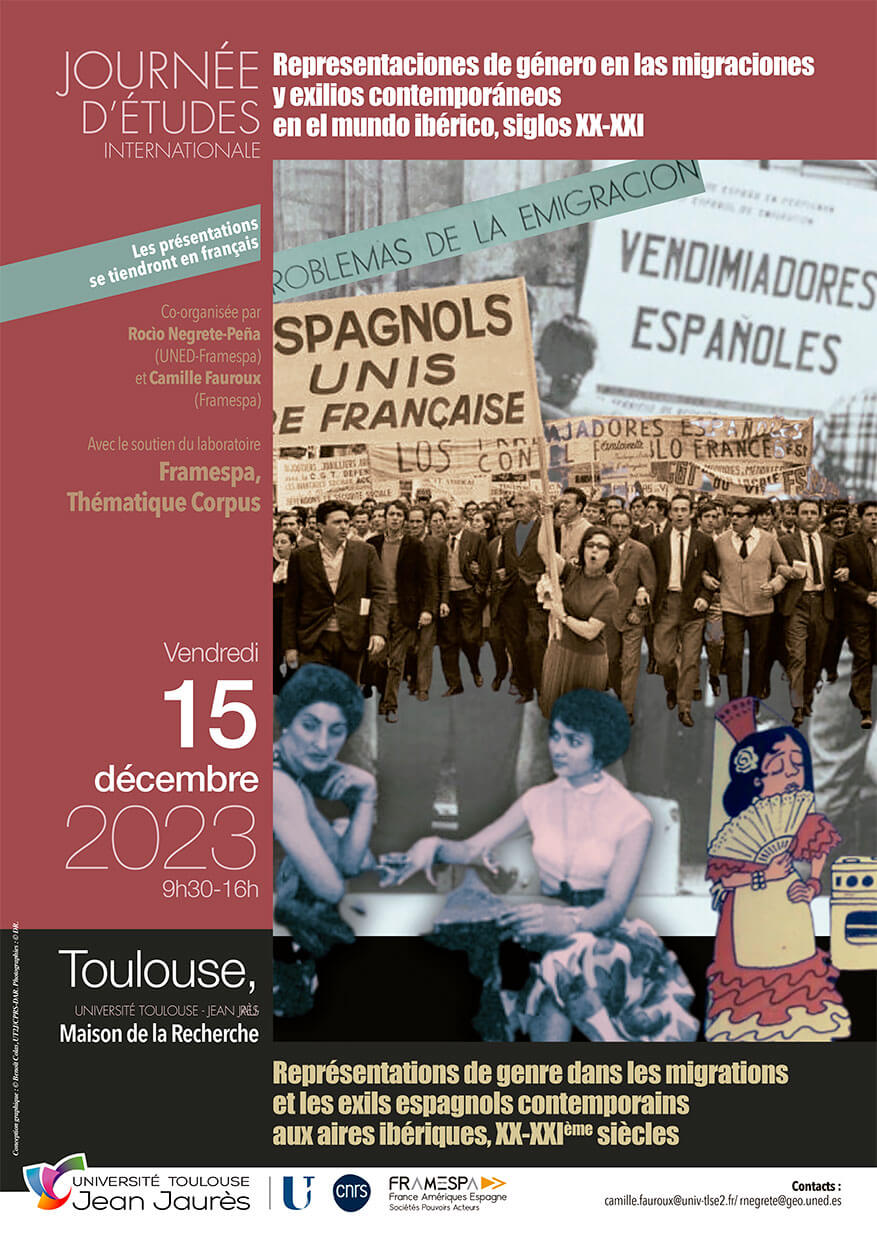
Friday 15 December 2023 from 9.30am to 12.15pm, at the MDR in room F315, then from 2pm to 4pm in room D155
El consorcio de REMEMCHILD está formado por un equipo de expertos y profesionales procedentes de universidades, fundaciones, memoriales y museos europeos: Universidad Nacional de Educación a Distancia y el grupo de investigación Migraciones y Conflictos Bélicos en la época contemporánea (UNED, España); Universidad Rey Juan Carlos (URJC, España); European Observatory on Memories (EUROM, Fundació Solidaritat-Universitat de Barcelona, España); Fundación Museo de la Paz de Gernika (FMPG, España); Maison d’Izieu, mémorial des enfants juifs exterminés (Maison d’Izieu, Francia); Fondazione Campo Fossoli (Fondazione Fossoli, Italia); European Association of History Educators (EuroClio, Holanda); International Committee of Memorial Museums in Remembrance of the Victims of Public Crimes (ICMEMO, Francia).







AMERICAN AID TO BRITAIN: LIFE AT SYSTON COURT NURSERY, THE SARA DELANO ROOSEVELT HOME, GLOUCESTERSHIRE, ENGLAND, 1942 © IWM (D 8876)
The REMEMCHILD project is a commitment to the continuity of the MIGRAID- Migrations and Humanitarian Aid in Europe (1914-1949)- project, approved in the Europe For Citizens 2019 call, whose main objective has been to delve into the collective experiences of children and women from 1914 to 1949, a turbulent and crucial period in the history of Europe, marked by two world wars and their multiple consequences on the civilian population.
REMEMCHILD recovers children’s experiences and memories during the European war conflicts, especially in WWII and the post-war period. Children were the most vulnerable part of the conflict, especially Jewish and Roma children, victims of the Holocaust, children with disabilities, abused and experimented on, and Resistance collaborators. WWII had other consequences on them as internees, displaced persons, refugees, orphans, etc. – victims, survivors and protagonists, as well as the great forgotten in the memory of the conflict. These figures will be addressed, recovered and vindicated alongside those of women, victims of Nazism, Resistance fighters and combatants, sanitary and medical workers, rear-guard workers, humanitarian aid volunteers, and mothers, protectors and carers of children. Through different impact and dissemination activities carefully designed for different target groups (school children, young people, researchers, humanitarian organisations, memorials, memorial associations, European Remembrance grantees, artists, refugees, among others), the project encourages constant interaction with the results, collective reflection, transnational cooperation and dialogue, and innovation of formats. In doing so, REMEMCHILD aims to: recover, transmit and preserve memories of children and women; combat Holocaust distortion/denial, prevent anti-Semitism, hatred and marginalization; defend and promote core EU values such as solidarity and equality; disseminate the capital of resistant experiences for the construction of democratic civil societies; enhance the socialization of child protection and gender equality policies; and highlight the importance of peace through intergenerational, transnational and memorial dialogue. Children and women continue to be the greatest victims of conflict, evidence that reinforces the need to explore and disseminate their experiences.
The REMEMCHILD project (101091194 CERV-2022-CITIZENS-REM) has been funded by the European Commission in the framework of the Citizens, Equality, Rights and Values programme - European Remembrance.
AMERICAN AID TO BRITAIN: LIFE AT SYSTON COURT NURSERY, THE SARA DELANO ROOSEVELT HOME, GLOUCESTERSHIRE, ENGLAND, 1942 © IWM (D 8876)
The REMEMCHILD project is a commitment to the continuity of the MIGRAID- Migrations and Humanitarian Aid in Europe (1914-1949)- project, approved in the Europe For Citizens 2019 call, whose main objective has been to delve into the collective experiences of children and women from 1914 to 1949, a turbulent and crucial period in the history of Europe, marked by two world wars and their multiple consequences on the civilian population.
REMEMCHILD recovers children’s experiences and memories during the European war conflicts, especially in WWII and the post-war period. Children were the most vulnerable part of the conflict, especially Jewish and Roma children, victims of the Holocaust, children with disabilities, abused and experimented on, and Resistance collaborators. WWII had other consequences on them as internees, displaced persons, refugees, orphans, etc. – victims, survivors and protagonists, as well as the great forgotten in the memory of the conflict. These figures will be addressed, recovered and vindicated alongside those of women, victims of Nazism, Resistance fighters and combatants, sanitary and medical workers, rear-guard workers, humanitarian aid volunteers, and mothers, protectors and carers of children. Through different impact and dissemination activities carefully designed for different target groups (school children, young people, researchers, humanitarian organisations, memorials, memorial associations, European Remembrance grantees, artists, refugees, among others), the project encourages constant interaction with the results, collective reflection, transnational cooperation and dialogue, and innovation of formats. In doing so, REMEMCHILD aims to: recover, transmit and preserve memories of children and women; combat Holocaust distortion/denial, prevent anti-Semitism, hatred and marginalization; defend and promote core EU values such as solidarity and equality; disseminate the capital of resistant experiences for the construction of democratic civil societies; enhance the socialization of child protection and gender equality policies; and highlight the importance of peace through intergenerational, transnational and memorial dialogue. Children and women continue to be the greatest victims of conflict, evidence that reinforces the need to explore and disseminate their experiences.
The REMEMCHILD project (101091194 CERV-2022-CITIZENS-REM) has been funded by the European Commission in the framework of the Citizens, Equality, Rights and Values programme - European Remembrance.